Source Adjustable Kids Inline Skates for Racing, Leisure, and Fancy Use
Find 30 adjustable kids inline skate options featuring durable rubber and fabric mesh construction with metal micro-adjustable buckles. Compare models like MS-JRIS406 and SG-RS8102, which offer ABEC-7 bearings and customizable colors for racing, leisure, and fancy skating applications; compare the available evidence and request quotations based on your requirements.
Key considerations
Products List


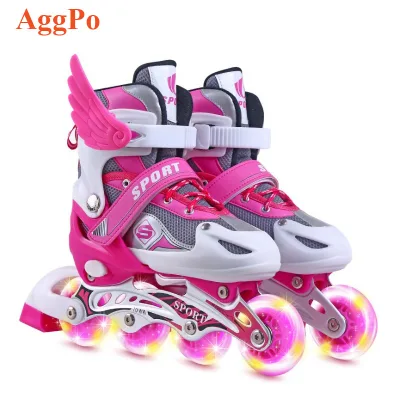


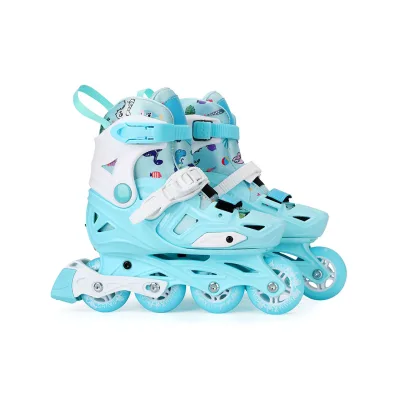
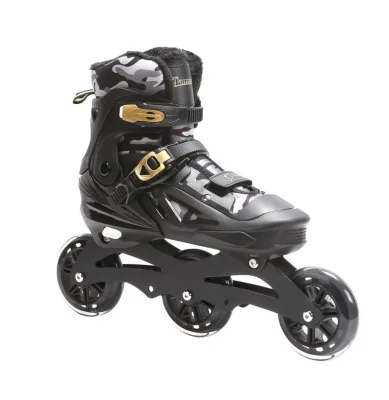
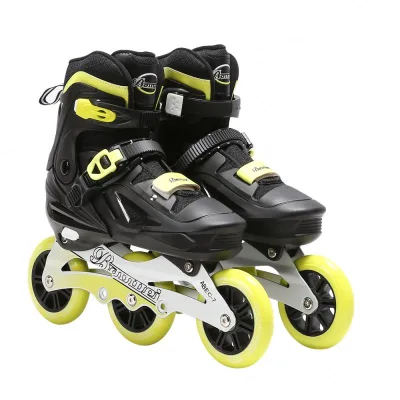
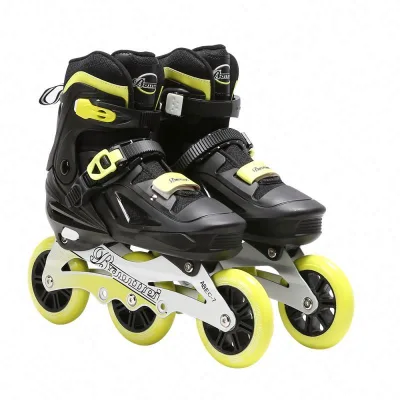


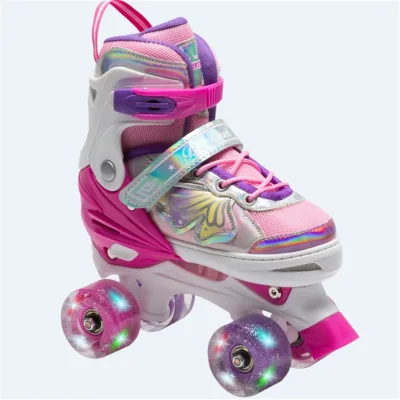
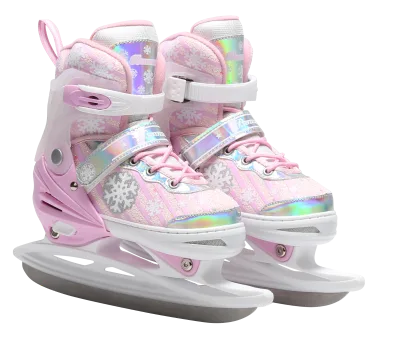

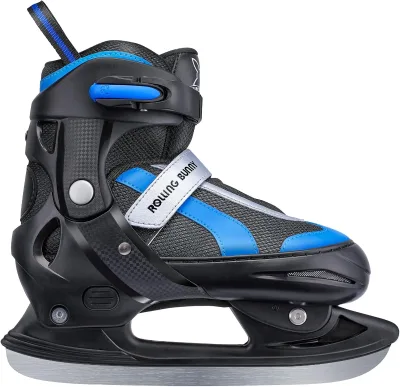
Comprehensive Sourcing Guide
Adjustable Kids Inline Skate Sourcing Guide
Product Scope and Observed Listing Signals
The adjustable kids inline skate category on B2B marketplaces spans a wide range of products, from genuine four-wheel inline skates for children to convertible skate shoes and related leisure footwear. Observed listings describe usage scenarios including leisure, fancy skating, and racing, with ice skates also represented under the broader skating type. Buyers should treat listed attributes as individual observations rather than guarantees that every product in the category satisfies them, and should confirm category fit for each candidate SKU. Typical models observed carry identifiers such as MS-JRIS406, MS-JRIS402, MS-JRIS404, MS-JRIS412, MS-S803, MS-DS533, and SG-RS8102, which helps in comparing spec sheets across listings.
Color options in observed listings include black-yellow, black-blue, pink, and multicolor variants, with materials cited as rubber combined with fabric mesh cloth, or plastic in some cases. Age group is consistently children, and many listings flag adjustable sizing and durability as core features. Customization is marked as available in several entries, and OEM/ODM service appears alongside brand names such as AGGPO. Origins are listed as China, with Zhejiang specifically noted, giving buyers a geographic starting point for factory outreach.
Technical Specifications to Verify
Sizing structure is the first technical checkpoint. Observed listings use an S, M, L size standard, which suits adjustable skates that span multiple shoe sizes within one shell, but buyers must confirm the exact foot-length range each size covers and how the adjustment mechanism increments. The buckle specification in one listing is a metal micro-adjustable buckle; verify buckle material, ratchet durability, and whether additional straps or laces supplement the closure. Materials cited as rubber plus fabric mesh, or plastic, should be checked for shell stiffness, liner breathability, and wear points around the ankle cuff.
Wheel and bearing components determine performance and replacement economics. Listings cite ABEC-7 bearings in some models and iron bearings in others, with wheels described as all-flashing, single-flashing, or PVC single-flashing. Buyers should confirm wheel diameter range per size setting, urethane versus PVC wheel composition, and whether flashing wheels use magnetic or battery-powered light modules, since this affects waterproofing and lifespan. Model-level specifications, such as the SG-VB carton configuration of six pairs per carton at 73×49×37 cm, should be matched against the specific model ordered rather than assumed across the range.
Compliance and Safety Documentation
Children's skating products sit in a regulated zone because they combine footwear, sporting equipment, and small mechanical parts. Buyers should request documentation proving compliance with toy or sporting-goods safety rules in the destination market, including chemical restrictions on plastics, dyes, and adhesives, and mechanical and physical safety tests covering sharp edges, small detachable parts, and buckle strength. Since none of the observed listings states a certification, treat certification status as unverified until the supplier produces test reports from a recognized laboratory for the exact model and material batch.
Adjustable mechanisms deserve specific safety scrutiny because a failing size lock can cause ankle injury. Ask the supplier for internal test evidence on adjustment-button cycle life, strap tensile strength, and wheel-to-frame attachment. Flashing wheels contain small electronic or magnetic components, so confirm these cannot be easily detached by young children. Request the supplier's quality-control procedures, sample policies, and any production inspection routines they can document. Where the destination market requires specific labeling, such as age grading and warning statements, align artwork requirements before mass production and keep the agreed compliance file as part of the purchase contract.
Cost Drivers and Commercial Terms
Component selection drives most of the unit-cost variance in this category. Metal micro-adjustable buckles cost more than simple strap closures; ABEC-7 precision bearings command a premium over basic iron bearings; flashing wheel modules add electronics cost relative to plain PVC wheels. Shell construction in rubber-and-mesh versus all-plastic also shifts cost. Buyers should request itemized quotations so they can compare offers on identical configurations and negotiate substitutions, such as reducing flashing coverage, where budget requires.
Commercial terms observed in the category provide a negotiation baseline but must be confirmed per supplier. Listed minimum order quantities range widely, from single-pair samples to 100-pair MOQs for some models and 1,000-pair OEM thresholds where customization applies. Packaging is cited as one pair per color box in some listings and six pairs per carton in others, which affects freight volume and per-unit packaging cost. Sample support is available in observed listings, with sample quantities of one to three pieces and sample lead times of five to seven days, and general delivery times around ten days noted, though these should be validated against current production schedules.
Supplier Qualification and Quality Control
Begin qualification by confirming the supplier's actual production role. Listings showing OEM/ODM capability and customization availability suggest manufacturer status, but trading companies also list these attributes. Verify factory identity through a business license check, a virtual or in-person audit, and by asking which production stages—shell injection, wheel assembly, bearing fitting, packaging—occur in-house. Regional clustering in Zhejiang, China, makes multi-supplier visits feasible, and comparing two or three factories on identical specification sheets yields the most reliable benchmark.
Quality control should combine pre-production samples, in-line inspection during assembly, and final random inspection before shipment. For adjustable skates, focus checks on the size-adjustment mechanism across all settings, buckle engagement, wheel rotation smoothness, flashing function, and carton packing accuracy against the stated carton dimensions and pack quantity. Golden samples should be retained by both parties, and any colorway or material change should trigger a new approval sample. Agree in writing on AQL sampling levels, defect classification, and remedies for failed inspections, and document everything in the purchase order rather than relying on verbal assurances.
Long-Term Procurement Checks
After the first successful order, shift focus from transaction screening to relationship durability. Track consistency between repeat shipments: identical buckle hardware, bearing grades, and wheel materials as approved samples, since cost-driven substitution is the most common silent downgrade in this category. Maintain a specification sheet with model numbers such as the MS-JRIS and MS-S series you source, locked material callouts, and packaging drawings, so any supplier-side change requires documented re-approval. Re-test compliance documentation annually or when materials change.
Plan assortment and capacity growth with the supplier's demonstrated strengths. If a factory proves reliable on children's adjustable inline skates with leisure and racing usage profiles, discuss extending the range with additional colorways such as the black-yellow, black-blue, and pink options already in their capability set, or deeper customization under OEM terms with the observed 1,000-pair thresholds. Monitor lead-time reliability against the ten-day delivery benchmark, buffer for peak season, and review packaging logistics as volumes grow. Periodic re-audits, spot market purchases of your own branded product to detect counterfeiting, and staggered dual-sourcing protect continuity as the program matures.
FAQs
What customization options are available for these skates?
Customization is available for these adjustable kids inline skates to meet specific buyer needs. The product supports OEM and ODM services, allowing for tailored designs. Buyers can request custom features while maintaining the core durable construction and metal micro-adjustable buckle system found in the standard models.
Which materials are used to construct the skate boots?
The skate boots are constructed using a combination of rubber and fabric mesh cloth for breathability and durability. Some variations may also incorporate plastic components for structural support. This material mix ensures the skates remain lightweight yet robust enough for leisure, fancy, and racing activities.
What is the minimum order quantity for bulk purchases?
The standard minimum order quantity is 100 pairs for general orders. However, for OEM customization services, the minimum order quantity increases to 1000 pieces. Buyers should verify specific model requirements as some listings may show different thresholds depending on the customization level requested.
How long does delivery take after placing an order?
The standard delivery time is approximately 10 days from order confirmation. This timeline applies to standard production runs. Buyers requiring samples can expect a shorter lead time of 5 to 7 days for 1 to 3 pieces, which helps in evaluating product quality before committing to bulk orders.
What bearing specifications are included with the skates?
The skates typically come equipped with ABEC-7 bearings for smooth rolling performance. Some specific models may feature iron bearings instead. These bearing types are selected to balance cost and performance, ensuring the skates are suitable for both children's leisure use and more serious racing applications.
Can I get samples before placing a large order?
Yes, sample support is available for buyers who wish to evaluate the product quality first. The sample quantity can range from 1 to 3 pieces per order. These samples are typically ready within 5 to 7 days, allowing buyers to inspect the adjustable features and color options before proceeding.
What packaging is used for shipping the skates?
Each pair of skates is individually packed in a color box for retail readiness. For bulk shipping, multiple pairs are consolidated into cartons, often containing six pairs per carton. This packaging ensures the skates remain protected during transit while maintaining their aesthetic appeal for end consumers.